
Vänern är större än man tror, det tog många timmar från Lurö som ändå ligger mitt i Vänern till att vi passerade den höga bron Vänersborg. När vi närmade oss Vänersborg kunde vi höra på VHF-radion att India III hade seglat snabbare än oss genom regnet, de var vi full färd i att öppna broarna in mot Vänersborg, väl när vi var i Vänersborg kunde vi höra dem kommunicera med slussarna innan knastret överröstade talet.
Vi tog en övernattning i Vänersborg eftersom vi inte skulle ha hunnit ta oss tillräckligt innan broarna och slussarna skulle stänga för dagen. Vi tog oss en promenad i Västra Götalands huvudstad och Jennifer pekade ut lägenheten hon en gång bott i. Resten av kvällen spenderade vi på en restaurang med vetskapen att vi har seglat den sista sträckan på detta äventyr. När vi vaknade på morgonen var våra båtgrannar redan i färd att förbereda sina båtar för att fortsätta sin resa genom älven, snabbt tog vi på oss kläder och sprang på toalett. Strax efter båtgrannarna var vi också ute på vattnet för att invänta broöppningen.
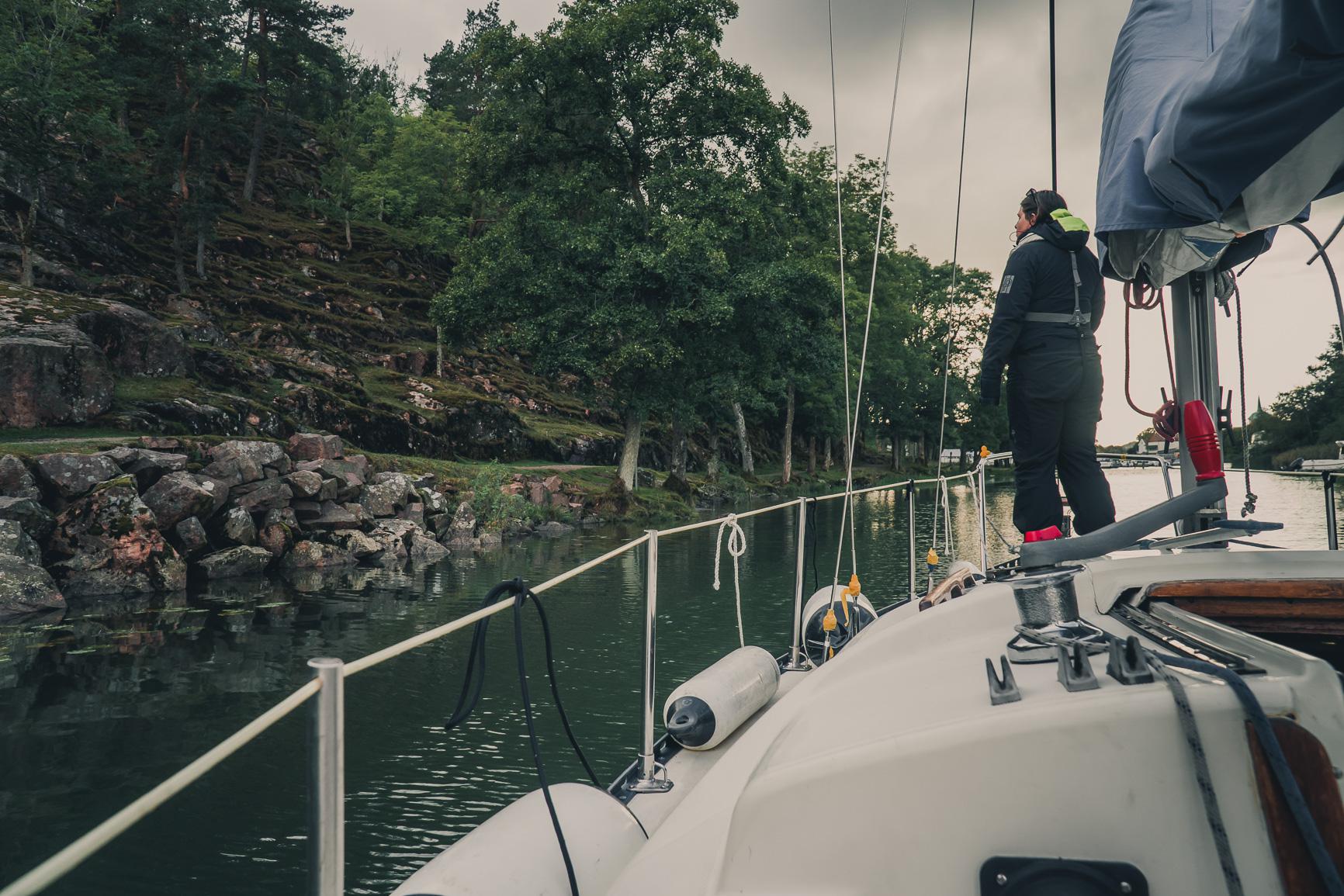
I Trollhättan 🌐 hörde vi på radion att de inväntade oss för en broöppning då det redan var en ensam dansk båt som låg och puttrade också ha broöppning. Vi anlände men fick inte syn på någon broöppning på ett bra tag. Vi blev stressade eftersom det skulle vara en löpartävling som skulle hindra broöppningen helt under flera timmar. Med knapptrycket på VHFen frågade jag var broöppningen hade tagit vägen, och svar fick vi att de skulle öppna bron.
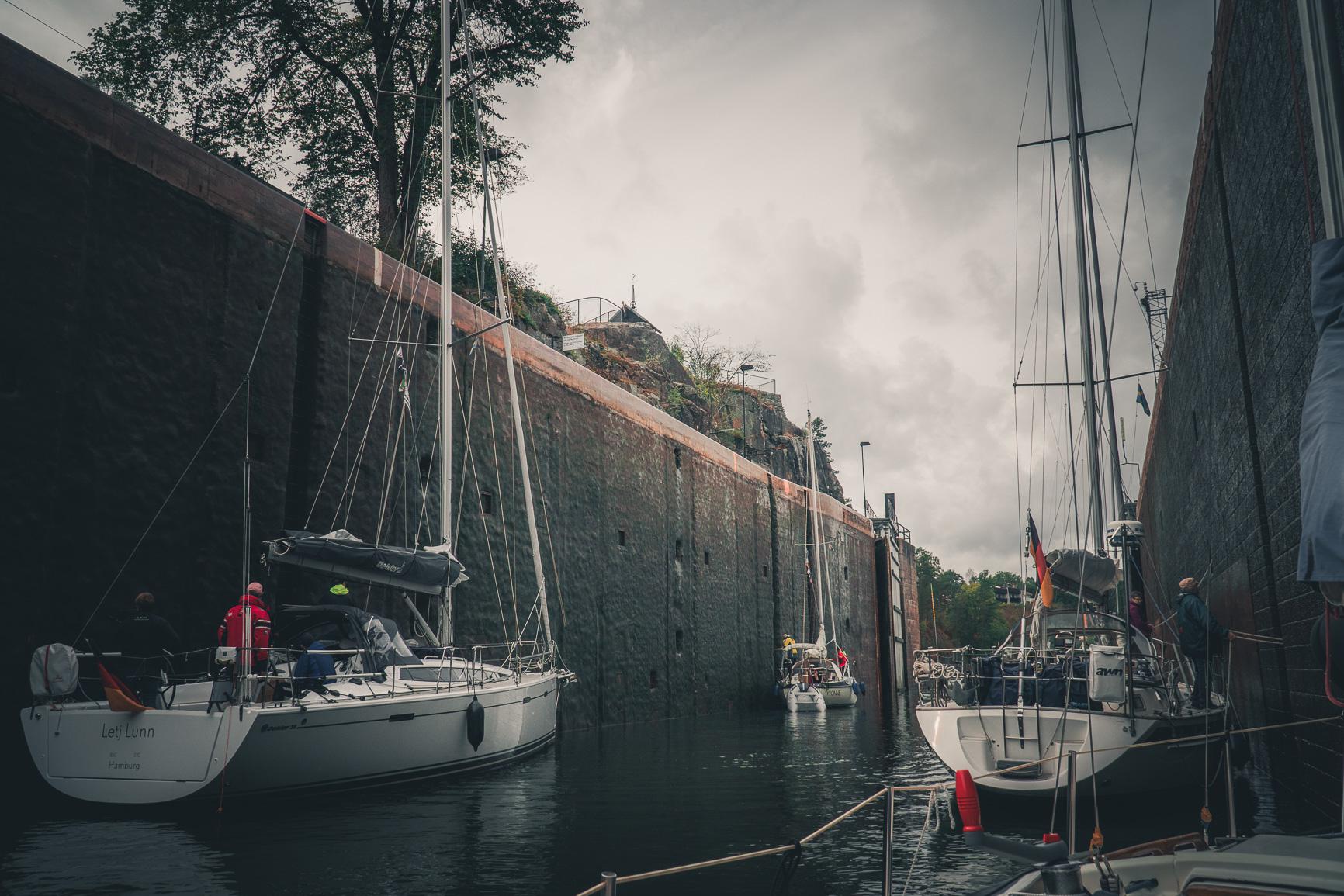
I Trollhättan upptäckte vi också att slussarna vi var med om i Göta kanal var väldigt små i jämförelse, fick fick lära oss den hårda vägen. När man slussas ner så ser man till att ha rep som går från båten upp till kajkanten och tillbaka in i båten, för att kunna ge mer rep när vattnet under båten sjunker och att ha kontroll över båten, när vi stod där och hoppades att det var slut på slussningen för våra rep började ta slut så hade vi bara kommit halvvägs. I väggen fanns det hål för att lägga an repet en gång till vilket var en väldans tur för oss eftersom längden på vårt rep var inte nog.
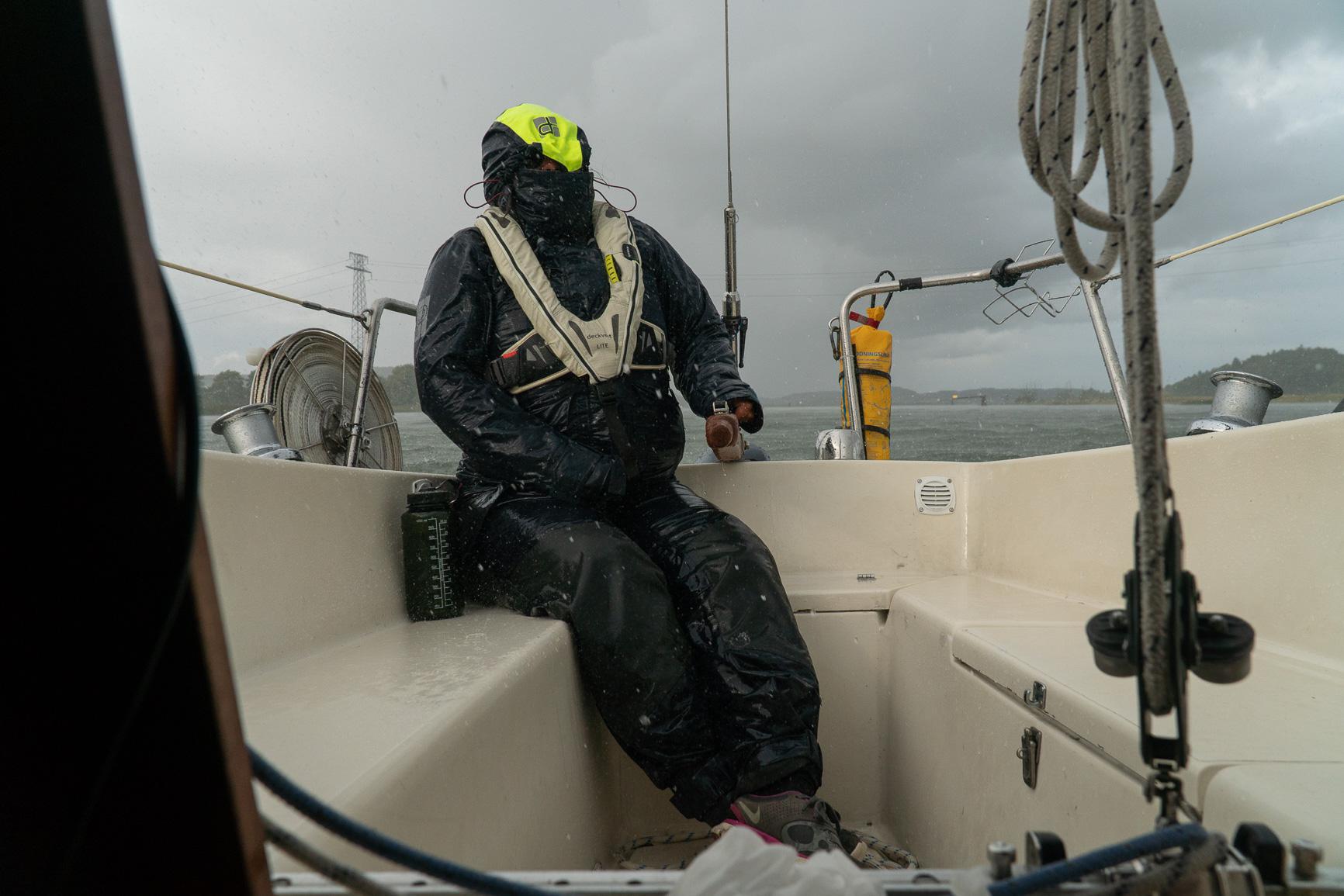
Närmare Göteborg, vårt slutmål kunde vi känna med regnet som en god påminnelse att västkusten var i närheten. Innan vi skulle ta oss till Göteborg fick vi ta en övernattning i Kungälv, som helt och hållet saknar en gästhamn eller någon som helst ordning när det gäller båtar på besök, en gång i tiden för länge sedan fanns det en gästhamn mellan Bohus fästing och Kungälv, vi gick in där i den smala passagen mellan vass för att undersöka läget. Den bryggan som en gång var gästplats var vänd åt fel håll och helt omöjligt att använda. Vi tjuvlånade tom båtplats för att kunna undersöka läget djupare. I ett kafé så frågade vi hur det fungerade, de rykte på axlarna och sa att Kommunen ger inga besked. Vi såg några ansikten vi kände igen från en tysk båt som vi slussats med i Göta kanal och frågade var de hade lagt till. På andra sidan Bohus fästing fanns det en pausbrygga för de som väntar på broöppning. Vi hoppade tillbaka i båten och flyttade oss. Kvällen spenderades på en väldigt fin Italiensk restaurang i Kungälv.